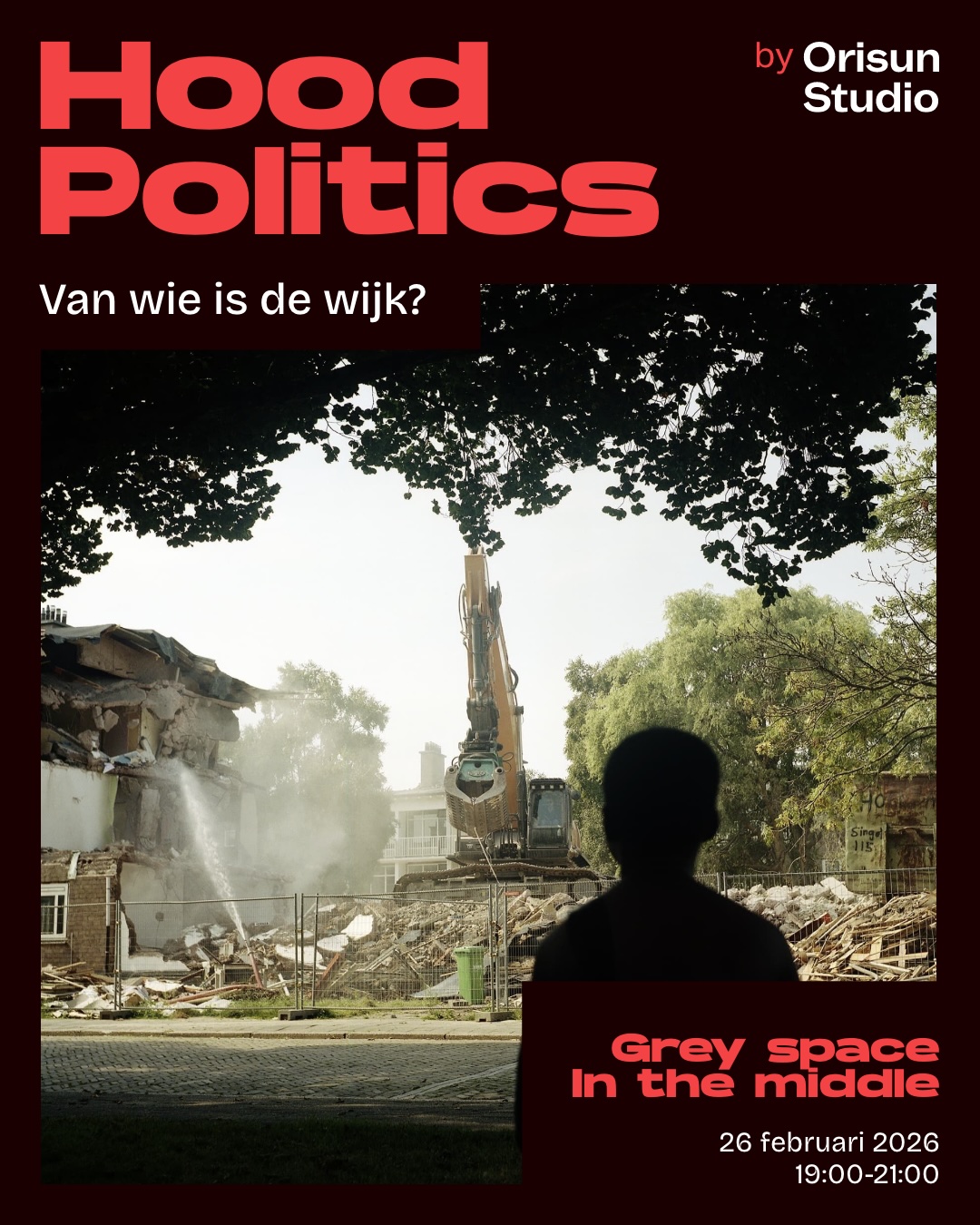
What would the world look like if we shaped it from the perspective of the neighbourhood? What if the ways people in areas like the Schilderswijk, Moerwijk and Amsterdam Zuidoost already organise themselves became the starting point for how we live together?
These neighbourhoods are the subject of a lot of policy, opinions and assumptions. They are often seen as “problem areas” in need of help. Yet these culturally rich districts actually show us what the future could look like. Who really decides what happens there? Who writes the stories? And more importantly: what knowledge, what forms of organisation and solidarity already exist, but remain invisible to those who do not look closely?
On 26 February we sit down with three people who show, every day, what alternative ways of organizing can look like. Three different ways of building community. What principles do they share? What can they learn from one another? And what if this became the norm?
Alongside these initiators, we also invite policymakers and members of the municipal council to join the conversation on what government and politics can learn from these ways of organizing.
This year, Orisun Studio launched the research project Hood Politics in response to the growing demand for socially relevant museums in a postcolonial and super-diverse society. The project explores how art and culture can contribute to opportunity-rich, liveable neighbourhoods and an inclusive urban future. At the same time, Orisun is exploring the development of its own physical space — a “museum of the future” that functions as a creative hub for and with the local community.